Eye of Horus jewelry
Showing 1–54 of 189 results
-

Ancient Cross Pendant Necklace
-

Ancient Egypt amulet
-

Ancient Egypt cross pendant
-

Ancient Egypt Necklace
-

Ancient Egypt Necklace
-

Ancient Egypt Ring
-

Ancient Egyptian amulet necklace
-

Ancient Egyptian Earrings
-

Ancient Egyptian Men’s Ring
-

Ancient Egyptian ring
-

Ancient Egyptian ring
-

Ancient Horus Amulet
-

Ankh Cross Amulet
-

Ankh Cross Jewelry Amulet
-

Ankh Cross Jewelry Amulet
-

Ankh Cross Men’s Amulet
-

Ankh cross necklace
-

Ankh cross necklace amulet
-

Ankh cross of life pendant amulet
-

Ankh cross pendant necklace
-

Ankh Cross Symbol Amulet
-

Ankh key amulet
-

Antique Egyptian bracelet
-

Antique Egyptian Necklace
-

Arm Cuff Bracelet
-

Authentic Egyptian Amulet
-

Blue Eye Bracelet
-

Blue eye necklace
-

Blue Eye Necklace
-

Blue eye pendant necklace
-

Blue Eye Silver Pendant Necklace
-

Blue scarab pendant amulet
-

Cartouche Bracelet
-

Cheops Ring
-

Egypt pendant
-

Egypt protection pendant
-

Egypt ring
-

Egyptian Amulet
-

Egyptian Ankh Amulet
-

Egyptian Ankh Cross Amulet
-

Egyptian Ankh pendant
-

Egyptian band
-

Egyptian cartouche amulet
-

Egyptian Cartouche Necklace
-

Egyptian cartouche pendant necklace
-

Egyptian cross of life ring
-

Egyptian cross pendant amulet
-

Egyptian cross pendant necklace
-

Egyptian cross silver pendant amulet
-

Egyptian cuff bracelet
-

Egyptian Cuff Bracelet
-

Egyptian earrings for women
-

Egyptian Eye Amulet
-

Egyptian eye bracelet
The Eye of Horus in Jewelry: More Than a Motif, a Powerful Symbol
Historical and Mythological Meaning of the Wadjet Eye
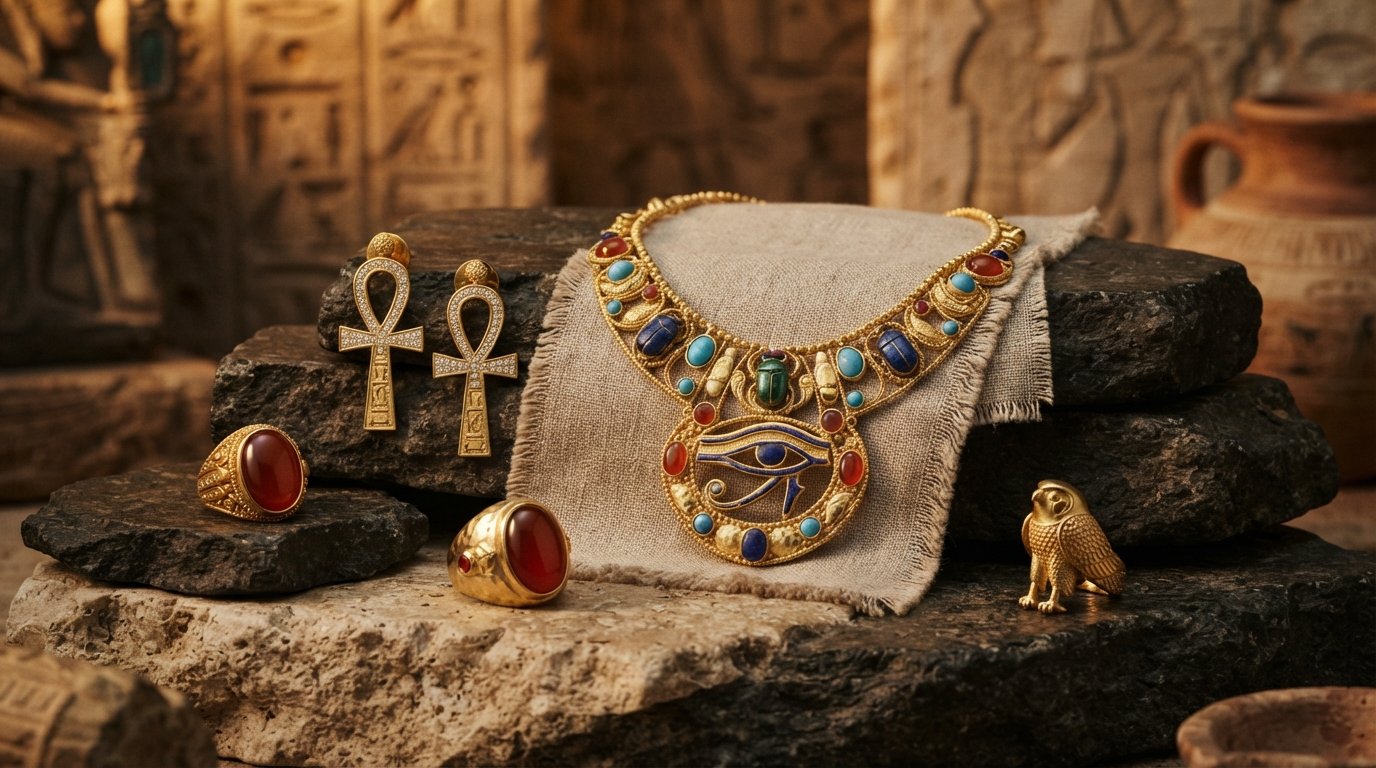
The Eye of Horus, often referred to as the Wadjet Eye, is not a simple ornament but a powerful hieroglyph whose origins trace back to ancient Egypt, over 5,000 years ago. Associated with the falcon god Horus, it symbolizes protection, healing, and regeneration. Pharaohs, like Tutankhamun—whose tomb, discovered in 1922, contained several Wadjet amulets—wore it frequently. It was a common talisman meant to safeguard the wearer’s physical and spiritual integrity against the dangers of the Nile or the malevolent spirits of the era. An eye that sees, certainly, but above all one that actively protects its owner.
How the Eye of Horus Became a Staple of Modern Jewelry
Its endurance across millennia has made it a truly timeless motif. From the earliest European archaeological expeditions of the 19th century, the Eye of Horus captivated the imagination, quickly finding its place in jewelers’ collections. Houses like Cartier, for instance, incorporated Egyptian motifs into their creations as early as the 1920s. Today, it appears on necklaces, rings, bracelets, and earrings. No longer just a funerary amulet, it now stands as a confident style choice, often worn as a nod to an ancient history or as a personal statement of protection.
Choosing Your Eye of Horus Jewelry: Materials and Craftsmanship
925 Silver, 18-Karat Gold, and Other Metals for Your Eye Piece
The choice of metal is key to both the look and durability of your Eye of Horus jewelry. 925 silver (92.5% pure silver and 7.5% other metals, usually copper) is prized for its cool shine and its ability to develop a unique patina over time. A silver pendant 2 cm in diameter weighs about 3 to 5 grams and remains an affordable option. Gold, typically 18-karat (75% pure gold), offers superior resistance to oxidation and holds its value well over the long term. For a tighter budget, 316L stainless steel is a sturdy alternative, effectively resisting corrosion and ideal for men’s jewelry or a piece worn daily.
Technical Details: Engraving, Inlay, and Finishing of Egyptian Symbols
The quality of an Eye of Horus piece comes down to the precision of its craftsmanship. Laser engraving allows for a faithful reproduction of the eye’s intricate details, even on compact pieces under 1.5 cm. For a touch of color, inlaying stones such as lapis lazuli—evoking the deep blue of the Egyptian sky—or turquoise is common practice. On a ring, a polished finish ensures optimal comfort on the finger and maximum shine. A brushed finish on a pendant, on the other hand, enhances the motif’s ancient, mysterious character. We recommend always checking the edges: they should feel smooth to the touch, free of any snags.
Wearing and Caring for Your Eye of Horus Jewelry Every Day
Styling the Eye of Horus: Looks and Occasions
A silver Eye of Horus pendant pairs effortlessly with a linen shirt or a simple t-shirt for a relaxed, confident look. A version in 18-karat gold, perhaps set with small diamonds or sapphires, adds elegance to eveningwear. Our advice: don’t overdo it—a single standout piece featuring the Eye of Horus is often more striking than several combined. For a minimalist style, a small 1 cm pendant on a thin chain is plenty. For a bolder look, a 3 cm model on a thicker chain makes a real statement. It suits a man’s wrist on a leather bracelet just as well as a woman’s neckline.
Practical Tips for the Longevity of Your Symbolic Jewelry
To preserve the shine and patina of your Eye of Horus jewelry, regular care is essential. Avoid direct contact with harsh chemicals such as pool chlorine (average temperature between 26 and 28°C) or perfumes. Clean silver about once a month with a soft cloth dampened with a specific silver cleaning solution, followed by rinsing with clean water and drying immediately. For gold, simply polishing with a microfiber cloth after each wear is enough. Store your pieces separately in a fabric pouch to prevent scratches, especially those set with stones.
How do I choose the ideal size for an Eye of Horus piece of jewelry?
Size depends on how you plan to wear it. For a discreet, everyday look, a pendant 1 to 1.5 cm in diameter is a good fit. If you want a more eye-catching piece, a 2 to 3 cm model will draw more attention. For rings, make sure the motif’s size is proportional to your finger for optimal comfort.
What’s the difference between an Eye of Horus pendant and an amulet?
Historically, an Eye of Horus amulet was a specific object worn for its protective and spiritual properties. Today, an Eye of Horus pendant is a piece of jewelry that uses this motif for its aesthetic appeal or meaning. The difference lies mainly in the wearer’s intent: the amulet has a primarily spiritual function, while the pendant is a piece of jewelry that can still carry a strong personal meaning.
Does my silver Eye of Horus jewelry tarnish? What should I do?
Yes, 925 silver can oxidize and tarnish over time—this is a natural process. To fix it, clean your jewelry with a special silver cleaning product, a treated polishing cloth, or a cleaning bath, carefully following the manufacturer’s instructions. Regular polishing and storage in a dry place away from air exposure help limit this effect.
Is Eye of Horus jewelry suitable for both men and women?
Absolutely. The Eye of Horus is a universal symbol of protection, and its neutral nature makes it adaptable to all genders. Designs vary, ranging from fine, understated pieces favored by women to bolder, chunkier styles more popular among men. The choice ultimately comes down to personal style and preferred metal.