Egyptian Pendants
Showing all 22 results
-

Ancient Egypt cross pendant
-

Anubis pendant
-

Egypt pendant
-

Egypt protection pendant
-

Egyptian Ankh pendant
-

Egyptian pendant
-

Egyptian protection pendant
-

Egyptian scarab pendant
-

Egyptian Scarab pendant
-

Egyptian Writing Pendant
-

Eye of Horus cartouche pendant
-

Eye of Horus pendant
-

Gold Egyptian Ankh pendant
-

Gold Egyptian cross pendant
-

Gold scarab pendant
-

Hieroglyph Pendant
-

Horus Pendant
-

Magic Egypt pendant
-

Men’s Scarab Pendant
-

Men’s Scarab Pendant
-

Protection Eye Pendant
-

Scarab pendant
Egyptian pendants: more than jewelry, a story around your neck
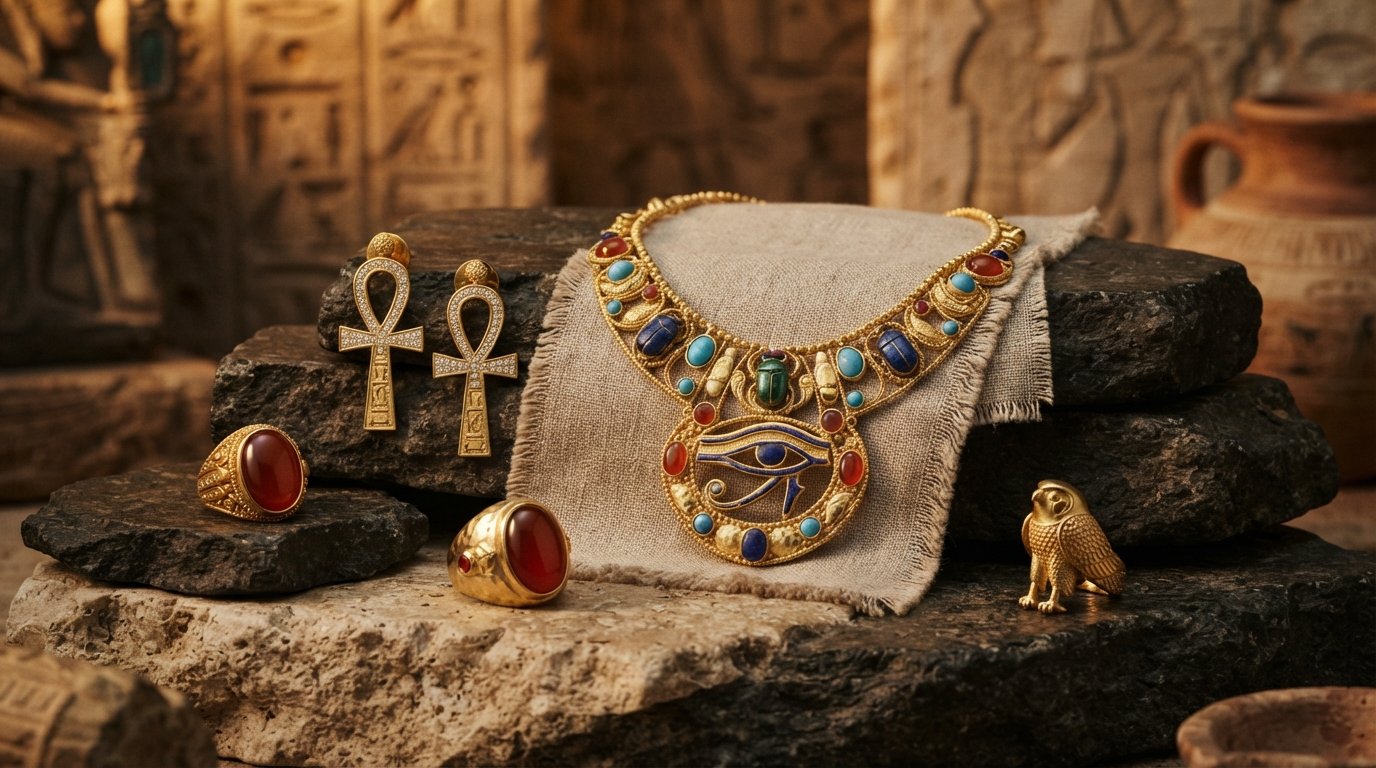
These Egyptian pendants are not simple ornaments; they embody thousands of years of history, beliefs, and symbolism. Far from bazaar imitations, pieces inspired by ancient Egypt today offer a tangible connection to a civilization that left its spiritual and artistic mark on humanity. Wearing one of these symbols means choosing to carry forward a legacy of protection, life, and regeneration, just as pharaohs and the inhabitants of the Nile Valley did over 3,000 years ago.
From everyday funerary amulets to inlaid royal ornaments, these jewels were charged with meaning. They were not designed to be merely beautiful, but to bestow power and safety upon their wearer. Understanding the original function of each symbol is essential to fully appreciate a pendant today, whether it’s a faithful reproduction or a contemporary interpretation.
The Scarab: symbol of rebirth and divine protection
The scarab, or Khepri, was one of the most widespread amulets in ancient Egypt, dating back to the Old Kingdom (around 2686-2181 BC). Associated with the god Ra in his morning form, it symbolized the cycle of the sun and, by extension, resurrection and perpetual renewal. Wearing a scarab pendant was no trivial choice; it was an invocation for protection against the forces of evil and an affirmation of faith in the cycle of eternal life. These amulets, often carved from glazed steatite, also served as seals, engraved with their owner’s name.
The Ankh: the key of life and immortality
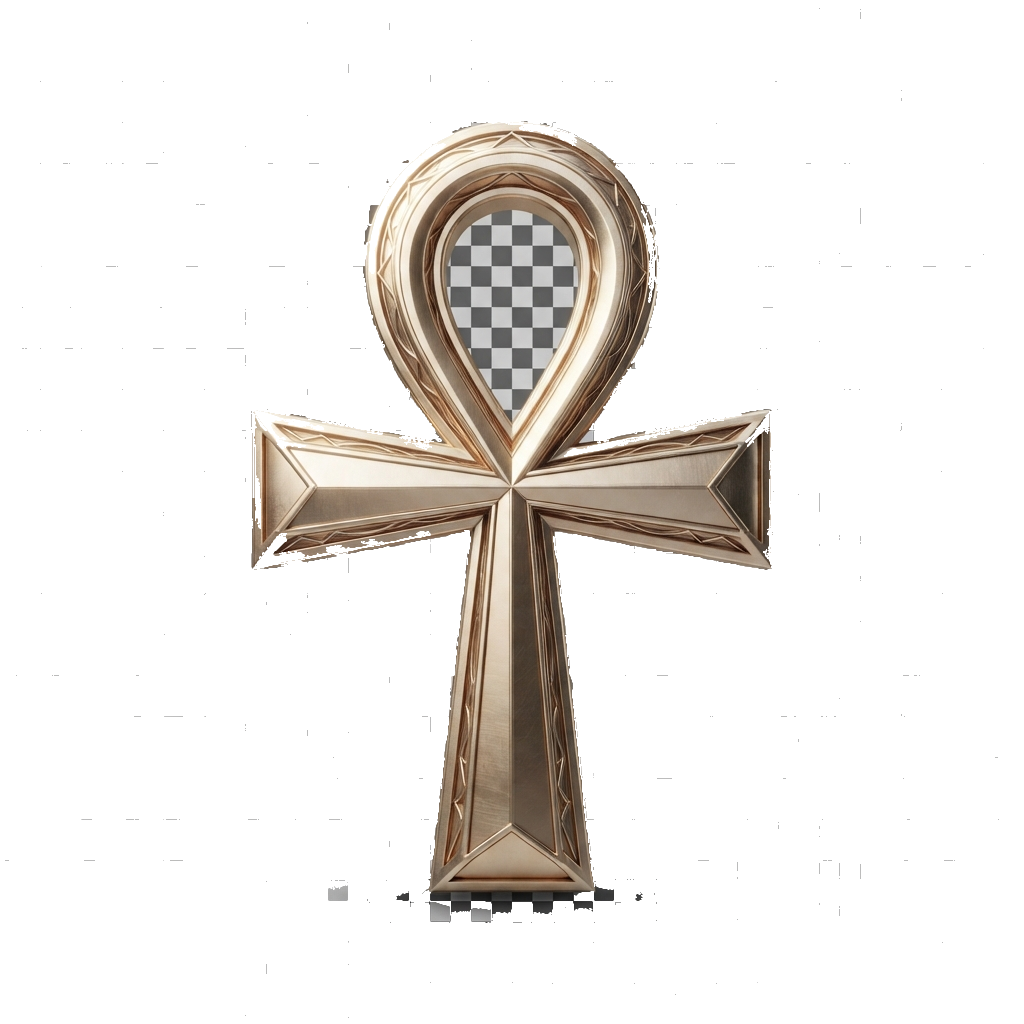
The Ankh, or key of life, is undoubtedly one of the most recognizable Egyptian symbols. Its shape, combining a circle and a cross, represents eternal life, regeneration, and fertility. Egyptian gods such as Isis or Osiris are frequently depicted holding the Ankh, thereby transmitting life to pharaohs or the deceased. An Ankh pendant is not just a decorative piece of jewelry; it’s a constant reminder of the flow of life and a lucky charm for vitality, often crafted in gold or silver for modern reproductions.
The Eye of Udjat (Eye of Horus): protection and integrity
The Eye of Udjat, commonly known as the Eye of Horus, is a powerful symbol of protection, healing, and the restoration of physical and spiritual wholeness. According to myth, it represents the eye Horus lost during his battle against Seth, which was later restored by Thoth. It was a crucial amulet for the living and the dead alike, meant to ward off the evil eye and promote good health. An Eye of Horus pendant today carries on this tradition, offering a strong symbol of vigilance and balance, often crafted in 925 silver with blue enamel inlays.
Materials and techniques: between tradition and modernity for Egyptian jewelry
Ancient Egypt mastered the art of jewelry-making with remarkable sophistication, using gold, silver, lapis lazuli, carnelian, turquoise, and faience to create sumptuous pieces. Today, Egyptian-inspired jewelry carries on this heritage with adapted techniques, blending historical respect with contemporary innovation.
The meticulous craftsmanship of precious metals in jewelry-making
Modern pendants are mostly forged in 925 sterling silver, a sturdy alloy made up of 92.5% pure silver, offering excellent resistance to oxidation and lasting shine. Some pieces may be plated with 18-karat fine gold, applying a layer of at least 3 microns for satisfactory durability over years of regular wear. The precision of the engraving and the quality of the polish are indicators of careful craftsmanship, able to reproduce the delicacy of hieroglyphs or the curves of a symbol like the Ankh. A faithful reproduction of Tutankhamun’s pendant, for example, requires particular skill for its openwork patterns.
Inlays and gemstones: an echo of ancient Nile colors
To recreate the vivid colors of the original pendants, contemporary artisans use semi-precious stones such as black onyx, green malachite, or deep blue lapis lazuli, stones whose hues recall those prized by the Egyptians. The use of enamel achieves intense, long-lasting blocks of color, mimicking glass paste or Egyptian faience (such as Egyptian blue, a synthetic pigment known since the 4th dynasty, around 2600 BC). These inlays are not purely decorative; they anchor the pendant within the symbolic color palette of ancient Egypt.
How to choose your Egyptian pendant? Buying guide
Given the wide variety of Egyptian amulets available, making an informed choice means considering several aspects: personal meaning, material, type of finish, and size for a comfortable fit.
Define the symbolism of the amulet that suits you
Choosing a pendant should above all resonate with personal meaning. If protection is your priority, the Eye of Horus or the scarab are relevant options. For a quest for vitality or a connection to eternity, the Ankh is a direct choice. The cartouche, for example, which was often engraved with the name of the pharaoh or an important figure, can be personalized with modern hieroglyphs for a unique touch. Think about the message you want to carry before making your final decision.
Material quality and durability for everyday wear
For jewelry meant to be worn frequently, opt for 925 silver or surgical-grade stainless steel. Silver, when well cared for, retains its shine for decades. Gold finishes should indicate a plating thickness (at least 3 microns for proper durability). As for stones, make sure they are securely set and free of cracks that could compromise their durability. A well-made pendant should have no sharp edges or irregular borders.
Adapting the pendant’s size and style to your build
A large pendant can become a bold statement piece against a plain neckline, while a more discreet version pairs better with everyday wear or a layered necklace look. For a 45 cm neck size, a pendant 2 to 3 cm in height is often ideal, while a piece of 5 cm or more will have more impact. Also consider the weight: a piece that’s too heavy can be uncomfortable over time. The balance between pendant size, chain thickness, and your overall build is essential for a cohesive look.
Frequently asked questions about Egyptian pendants
How do I choose the Egyptian pendant that suits me best?
To make the right choice, first identify the meaning that appeals to you most among symbols like the Ankh (life), the scarab (rebirth), or the Eye of Horus (protection). Next, consider the material: 925 silver is durable for everyday use, while gold plating offers a classic look. Finally, match the pendant’s size to your personal style and the occasion, a small piece for discretion, a larger one to make a statement.
What’s the difference between an “authentic” pendant and a reproduction?
An “authentic” pendant in the archaeological sense is an original artifact dating back to ancient Egypt, found in museums and illegal to sell. A faithful reproduction draws directly from these historical pieces, respecting their shapes and symbols, but is crafted today using modern materials such as silver or enamel. The value of a reproduction lies in the quality of its craftsmanship and its faithfulness to the original design, not in its age.
How do I care for my silver Egyptian pendant to preserve its beauty?
For a 925 silver pendant, regular cleaning with a soft cloth designed for jewelry is enough to maintain its shine. If it oxidizes, use a silver cleaning solution or a bit of diluted baking soda. Avoid prolonged contact with seawater, harsh chemicals, and perfumes. Store your pendant in an airtight pouch when not wearing it to slow down oxidation.
Who is an Egyptian pendant a fitting gift for?
An Egyptian pendant is a meaningful gift for anyone passionate about history, mythology, or spirituality. It’s also well suited to those who appreciate jewelry rich in meaning, such as a symbol of protection, luck, or new life. The choice of symbol can be tailored to the recipient’s personality: the Ankh for someone seeking vitality, the Eye of Horus for someone in need of protection or balance.
Are Egyptian pendants suitable for everyday wear?
Yes, many modern Egyptian pendants are designed for everyday wear. Opt for 925 silver or stainless steel models for their durability. Designs with smooth shapes and few rough edges will be more comfortable and less likely to snag. If your pendant features stones, make sure they are securely set to withstand everyday bumps. Regular care will ensure its longevity.