

With over 14 years dedicated to Egyptian-inspired jewelry, he has personally examined thousands of scarab, ankh, and Eye of Horus pieces.
Why symbols were central to Ancient Egypt
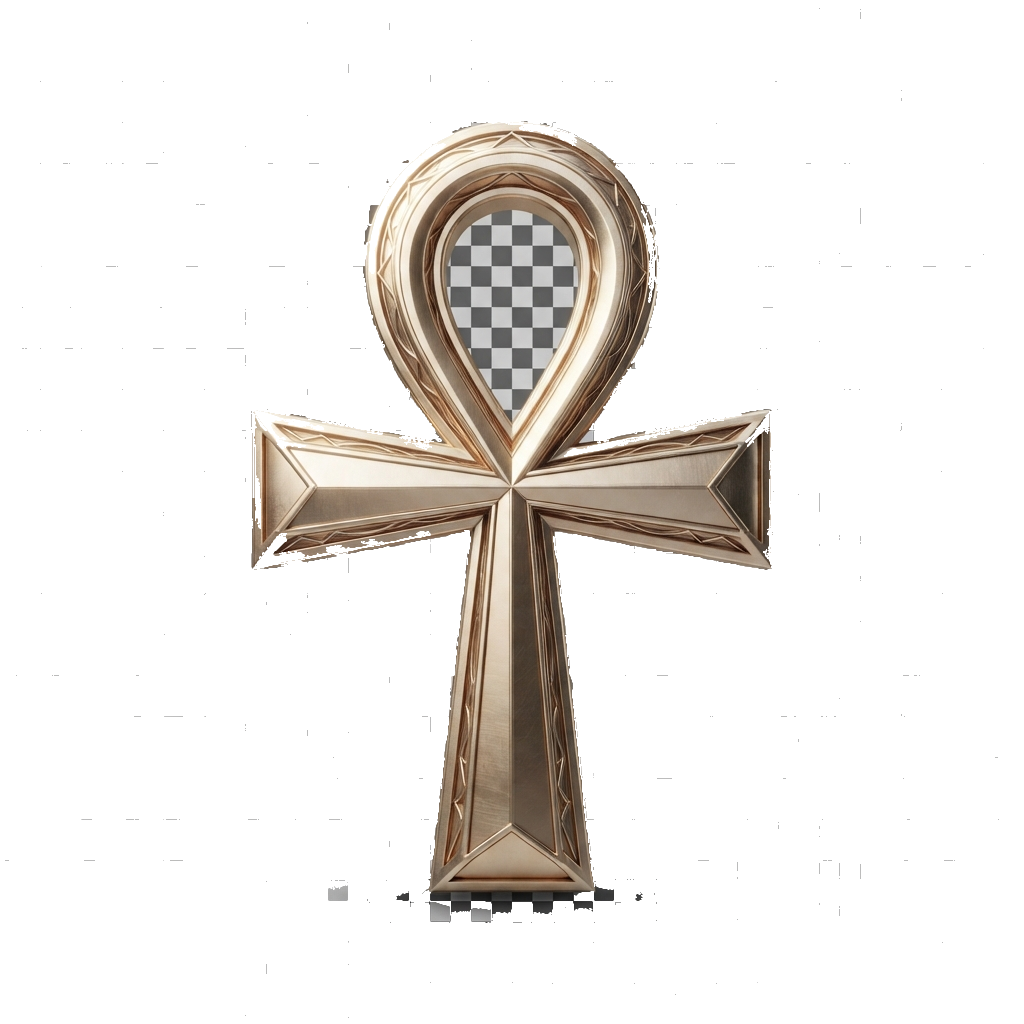
The Ankh: life and continuity
The Eye of Horus: protection, integrity, and healing
The Eye of Horus, also known as the Wadjet or Wedjat, is one of the most powerful and iconic symbols of Ancient Egypt. It originates from the myth of the conflict between Horus and Seth, during which Horus loses an eye before it is restored.
This restoration is more than just a narrative detail: it represents the return to order after chaos, the mending of an imbalance, and the reconstitution of a broken unity.
In Egyptian thought, the Eye of Horus symbolizes much more than just protection. It embodies restored integrity, conscious vigilance, and the ability to heal, whether from a physical wound, a moral trial, or a spiritual disturbance.
It was used as a protective amulet, but also as a sign of harmony and restored stability.
Wearing an Eye of Horus necklace can represent a desire for protection, as well as a personal reminder to remain clear-sighted, preserve your balance, and cultivate resilience in the face of challenges.

The scarab: rebirth and solar energy
The scarab, called Kheper in ancient Egyptian, is one of the most powerful and consistent symbols in Egyptian philosophy. It should not be reduced to a simple decorative motif: it embodies a fundamental cosmic idea, that of the perpetual cycle and renewal.
Associated with the god Khepri, a manifestation of the rising sun, it represents the moment when light returns and a new cycle begins.
In the Egyptian worldview, nothing is static: everything evolves, dies, and is reborn in another form. The scarab thus becomes the symbol of movement, transformation, and vital energy in action.
Its strength lies in this constant dynamic: it doesn’t just protect; it pushes you to move forward.
Today, the scarab is particularly popular in jewelry for its intentional dimension. It speaks of renewal, discipline, personal reconstruction, or a fresh start.
Wearing a scarab is an affirmation of a desire for evolution and alignment with a positive cycle, whether personal, spiritual, or symbolic.

Djed and Tyet: stability and protection
Less famous than the Ankh or the Eye of Horus, the Djed and the Tyet nevertheless hold an important place in Egyptian symbolism. These two signs embody fundamental concepts: stability, grounding, continuity, and protection.
Their strength lies in their subtlety. While other symbols immediately grab attention, these suggest a deeper, almost silent inner strength.
In Ancient Egypt, they were linked to essential principles of maintaining order and preservation. They were not merely ornaments but were part of a worldview based on balance and solidity.
Integrated into amulets or ritual objects, they expressed the idea that enduring and protecting were sacred acts.
Today, these symbols appeal to those seeking jewelry that carries a more subtle message. Choosing the Djed or the Tyet means favoring a less obvious but deeply structuring symbolism: affirming stability, resilience, or a need for constant protection.
The cartouche: identity and protective bubble
The cartouche, derived from the shen symbol, takes the form of an elongated oval that frames a name in hieroglyphs. In Ancient Egypt, it was reserved for royal names and embodied a powerful idea: protecting identity and inscribing it in time.
The name was not a simple administrative label; it was an integral part of the being. Preserving the name meant preserving existence itself.
The closed shape of the cartouche acted as a symbolic barrier. It surrounded the name to protect it from hostile forces, whether visible or invisible, and affirmed the sovereign’s legitimacy. Inscribed within this “bubble,” the name became stable, recognized, and secure.
The cartouche was therefore not merely decorative: it held a powerful spiritual and political function.
Today, the cartouche is often revisited as customizable jewelry. Engraving a name or a powerful word does not exactly replicate the ancient royal usage, but it retains the central idea: affirming an identity and giving it symbolic weight.
Wearing a personalized cartouche becomes an intentional gesture. It can represent a bond, a commitment, or a personal reminder.

Snake, vulture, falcon: power and vigilance
In Ancient Egypt, animal representations occupied a central place in sacred iconography. The snake, the vulture, or the falcon were never just decorative figures: they embodied specific forces linked to power, protection, and vigilance.
These animals were often associated with deities or royal functions, which reinforced their symbolic reach. Their presence on a piece of jewelry conveyed a strong intention, sometimes linked to authority, other times to spiritual surveillance or rebirth.
What makes these motifs particularly fascinating is the richness of their interpretations. The animal’s posture, its orientation, or its association with other symbols could subtly alter the message conveyed.
A bird with wings spread did not express the same idea as a stylized animal placed in the center of a cartouche. The visual and cultural context was decisive.
Even today, these animal figures retain a powerful aura. They captivate with their graphic strength and historical depth.
The snake (uraeus): sovereignty and control

The falcon: perspective and protection
Associated with the god Horus, the falcon embodies celestial power, authority, and royal protection. In Ancient Egypt, it symbolized the pharaoh’s divine legitimacy and his ability to govern with foresight.
Its piercing vision represents clarity and vigilance against dangers, while its high flight evokes spiritual elevation and self-mastery.
Colors, stones, materials: hidden symbolism
We often talk about the symbols engraved in Egyptian jewelry, but Ancient Egypt also placed major importance on colors and materials. Nothing was left to chance: the hue of a stone or the choice of a metal fully contributed to the message conveyed.
For example:
- Blue (lapis lazuli, blue faience): associated with the sky, the divine, and protection.
- Green: a symbol of regeneration, health, and renewal.
- Red: energy, power, and vitality, but also danger depending on the context.
- Gold: considered the “flesh of the gods,” linked to eternity and incorruptibility.
- Silver (rarer): sometimes associated with the moon and a cooler, more mysterious light.
The materials themselves were meaningful. Gold, being unalterable, evoked permanence, while certain natural stones were chosen as much for their color as for their rarity.
Today, many Egyptian-style pieces are made of stainless steel or modern alloys. This is not a historical betrayal, but a contemporary adaptation.

How to wear an Egyptian symbol today
Wearing an Egyptian symbol today can be an aesthetic, cultural, or personal choice. The key is to adopt a coherent and conscious approach.
These symbols are not just graphic ornaments: they carry an ancient history and meaning. Even without entering into a strict spiritual practice, it is relevant to respect their symbolic reach.
Without falling into dogma, there is a simple and balanced approach:
- Understand the symbol: at a minimum, know its central idea and what it represented originally.
- Avoid incoherent accumulation: mixing several strong symbols without logic can dilute their meaning.
- Own the intention: protection, strength, rebirth, stability… choose a clear focus.
- Respect the sacred if you invoke it: if you speak of a talisman, treat it as such, not just as a simple decoration.
Symbolic jewelry often functions as a daily reminder. It can act as a visual anchor, an image that refocuses attention and reinforces a personal intention.

FAQ about Egyptian symbols
Which Egyptian symbol is the most protective in jewelry?
The Eye of Horus is generally the most associated with protection, as it symbolizes restored integrity and vigilance. The Ankh protects more through the idea of vitality and continuity, while the scarab is more oriented toward transformation and rebirth.
Does wearing an Ankh have a religious meaning?
In antiquity, the Ankh was linked to the sacred and the divine, but its modern use is often cultural, aesthetic, or symbolic. If you wear it as a “talisman,” it is primarily the personal intention that counts, provided you respect what the symbol represents.
What is the difference between the Eye of Horus and the Eye of Ra?
The Eye of Horus is associated with protection, healing, and the myth of Horus. The Eye of Ra refers more to solar power and a fiery, sometimes punitive force. They are visually similar but differ in their symbolism.
Is the scarab a symbol of luck?
It can be perceived as favorable, but its original meaning is rebirth, the solar cycle, and renewal. The idea of “luck” is a simplified modern interpretation.
Is a cartouche with my name historically accurate?
Originally, the cartouche framed royal names in hieroglyphs. Current personalization is a modern adaptation, but it remains consistent with the idea of protecting and affirming an identity.
Can you wear several Egyptian symbols at the same time?
Yes, provided you maintain a symbolic logic. It is better to combine 1 or 2 complementary symbols rather than multiplying motifs without coherence.
What is the most iconic symbol of Egypt?
The Ankh is the most iconic symbol. It represents life, vitality, and continuity, and remains one of the most recognizable signs of Ancient Egypt.
What is the Egyptian good luck symbol?
The most well-known good luck symbol is the scarab. In Ancient Egypt, it represents rebirth, renewal, and luck linked to the cycles of life.
What is the Egyptian protection symbol?
The most iconic protection symbol is the Eye of Horus (also called the Wadjet). It is associated with protection against evil, vigilance, and security.
What is the Egyptian symbol for healing and protection?
This is also the Eye of Horus, as it symbolizes restored integrity, healing after a wound, and lasting protection.


