

With over 14 years dedicated to Egyptian-inspired jewelry, he has personally examined thousands of scarab, ankh, and Eye of Horus pieces.
Origins of Egyptian amulets: meaning, function, and beliefs
In ancient Egypt, daily life was deeply intertwined with spiritual beliefs. The Egyptians believed that the universe rested on a fragile balance between order and chaos, and that everyone needed protection from invisible forces.
Amulets were not mere ornaments, but true talismans charged with powerful symbols. Their role was to protect, heal, attract prosperity, and accompany the soul after death. Present throughout life, they also held an essential place in funerary rites.
Each amulet was considered a sacred object transmitting its benefits to its wearer. Its shape, inscriptions, color, and materials—such as blue faience, semi-precious stones, or specific metals—reinforced its symbolic power.
Originally, they served to:
- Protect against physical and spiritual dangers
- Preserve health and promote healing
- Attract luck, prosperity, and well-being
- Accompany the soul into the afterlife
- Strengthen faith and intention during religious rites
Even today, these symbols can be worn with awareness and intention.

What does an Egyptian protection amulet mean?
An Egyptian protection amulet was primarily an apotropaic symbol, meaning it was designed to ward off evil, repel negative energies, and preserve the wearer’s balance. In ancient Egyptian thought, the world was traversed by invisible forces that had to be harmonized constantly.
Wearing a talisman was therefore not just a symbolic gesture: it was a true form of spiritual protection.
Certain amulets represented protective gods, sacred animals, or mystical symbols charged with precise meanings. Each type had a well-defined role:
• Bring health and promote healing
• Strengthen vitality and inner energy
• Protect against illness and accidents
• Ensure a safe transition to the afterlife
• Maintain harmony between body and mind
The choice of an amulet therefore depended on the desired intention. Today, even if we do not necessarily attribute magical power in the strict sense to these objects, their symbolic dimension remains strong.
Many wear them for the deep meaning they embody, as a daily reminder of protection, inner strength, and self-confidence.

The Eye of Horus: a symbol of protection, healing, and wisdom
The Eye of Horus is arguably one of the most powerful and recognizable symbols of ancient Egypt. Also called the Wedjat, it embodies protection, healing, and wisdom. Its distinctive shape, immediately identifiable, has spanned centuries without losing its symbolic force.
In Egyptian culture, this emblem did not just represent a stylized eye, but a true source of protective energy, associated with vigilance, balance, and integrity.
Worn as an amulet, the Eye of Horus was considered a talisman capable of warding off visible and invisible dangers. It symbolized the ability to overcome trials, restore harmony after chaos, and preserve the unity between body and mind.
This deeply spiritual dimension made it a central object in both daily life and religious practices.
Even today, the Eye of Horus retains this mysterious and protective aura. It appeals as much for its meaning as for its elegant and timeless aesthetic.
Choosing this symbol means affirming a desire for protection, inner clarity, and personal strength, while wearing a fragment of ancient history charged with meaning.

The Ankh Cross: the energy of eternal life and harmony
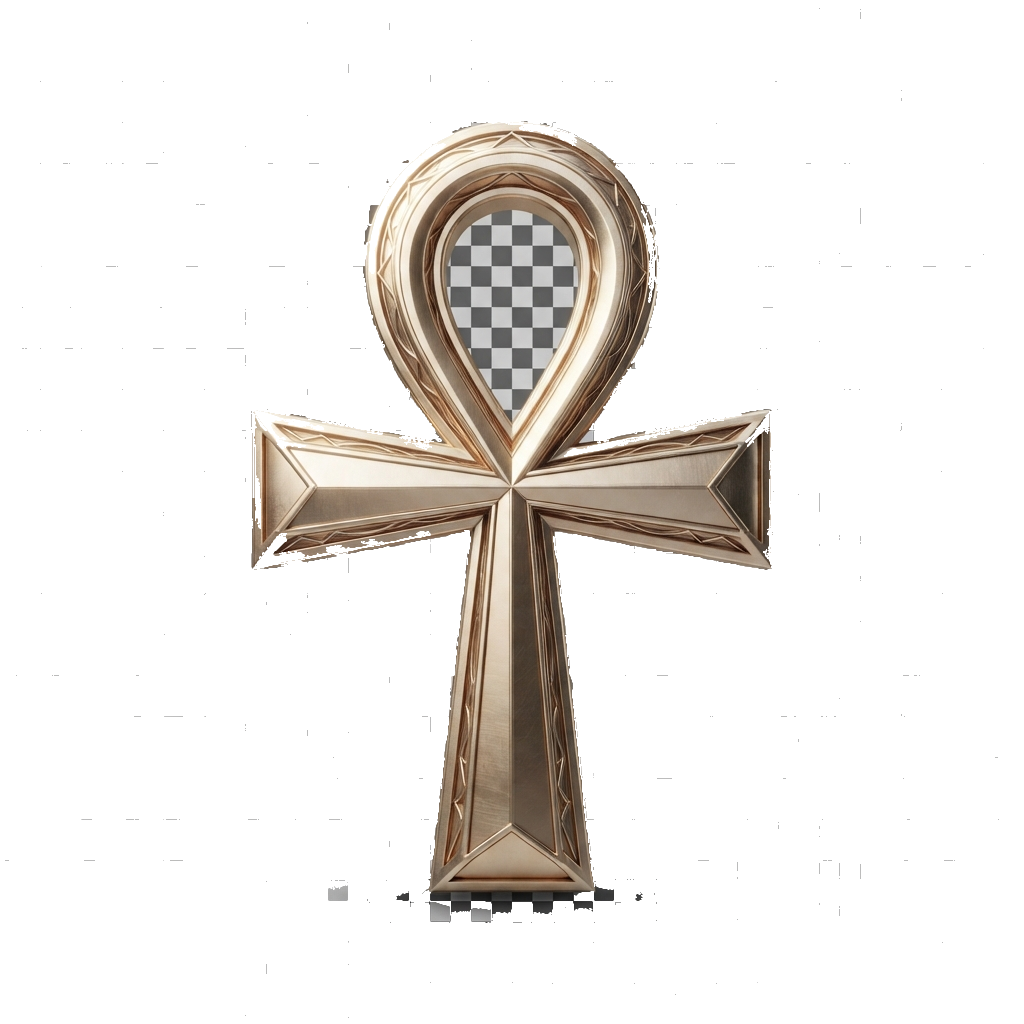
The Ankh cross is one of the most iconic symbols of ancient Egypt and one of the most recognizable in the world of egyptian amulets. Its unique shape, consisting of a loop atop a cross, gives it an aesthetic that is both simple and deeply symbolic.
It represents eternal life, vital energy, and the fundamental balance that unites the material and spiritual worlds. In ancient depictions, deities often held the Ankh in their hands, a symbol of the breath of life granted to human beings.
Worn as an amulet, the Ankh cross embodied the continuity of existence and the life force that flows through all things. It was associated with longevity, inner harmony, and spiritual stability. More than just a religious sign, it expressed a global vision of life, where every element is connected to a higher order.
Even today, the Ankh cross retains all its symbolic power. It captivates with its timeless design and universal meaning.
Wearing this symbol means affirming an attachment to the idea of wholeness, balance, and vitality, while sporting a piece of jewelry steeped in history and spiritual depth.

The Scarab: rebirth, luck, and transformation
Among ancient egyptian amulets, the scarab stands out for its profound symbolism of rebirth, regeneration, and luck. This insect, observed in nature shaping and rolling a ball before it, deeply influenced the Egyptian imagination.
The ancients saw in it a representation of the sun’s movement across the sky, a symbol of the perpetual cycle of life, death, and renewal.
In ancient Egypt, the scarab was closely associated with Khepri, the deity representing the rising sun and the daily transformation of light. It embodied the idea that every day is a new birth.
The scarab was often placed in tombs to protect the heart of the deceased and promote their rebirth in the afterlife. It was also worn as a talisman to attract luck, strengthen vitality, and symbolize constantly renewed energy.
Today, wearing a scarab amulet can be a way to remind yourself that every ending is a new beginning, and that you are capable of personal transformation and growth, whether physically or spiritually.

Other amulets and their meanings: symbolic diversity
Beyond the most famous symbols like the Eye of Horus, the Ankh, or the scarab, ancient Egypt possessed a great diversity of amulets representing very specific concepts.
Each shape, figure, and inscription answered a particular intention. The ancient Egyptians placed considerable importance on symbolism, and the choice of an amulet was never left to chance.
It had to correspond to a specific need: protection, vitality, fertility, prosperity, or spiritual guidance.
Among these lesser-known but equally powerful symbols, we find:
• Shen ring – a symbol of eternal protection and continuous security, representing an endless circle, an image of infinity and permanence.
• Wadj – an amulet in the shape of a papyrus stalk, associated with youth, vitality, and lasting health.
• Representations of deities like Isis, Bastet, or Anubis, each embodying a precise function: maternal protection, home protection, or guidance in the passage to the afterlife.
This symbolic richness allowed the amulet to be adapted to the wearer’s personal intention. Even today, this diversity offers the possibility of choosing a symbol in harmony with one’s deep aspirations.
How to wear an elegant Egyptian amulet
One of the great advantages of amulets inspired by ancient Egypt is their ability to integrate naturally into a modern and elegant style.
They bring a strong symbolic touch without ever weighing down an outfit, creating a subtle balance between ancient heritage and contemporary aesthetics.
Their design, often sleek and structured, makes them easy to wear daily. Whether discreet or bold, amulets adapt to different clothing styles, from chic minimalism to more daring looks.
They can become a refined detail that catches the eye or remain an intimate symbol, worn close to you with discretion.
Materials also play an important role in the elegance of the amulet. Precious metal, steel, leather, or natural stones each bring a unique identity to the jewelry.
The choice depends on the personality and the intention one wishes to express. A fine and delicate amulet will evoke subtlety, while a more imposing model will assert a stronger presence.
Wearing an amulet today means combining style and meaning. It is not limited to a simple decorative accessory: it embodies a personal symbol, a daily reminder of protection, balance, or transformation, while maintaining timeless elegance.
How to choose your amulet: a practical guide
Here is a short guide to help you choose the Egyptian amulet that suits you:

FAQ – Egyptian amulets, meanings, and uses
Egyptian amulets still spark many questions today, as their symbolism is so rich and deeply rooted in history. Inherited from a fascinating civilization, they continue to inspire through their spiritual, aesthetic, and cultural dimension.
Many wonder about their true meaning, their ancient usage, and how they can be worn in the modern era.
In ancient Egypt, amulets held an essential place in daily and religious life. They were used to protect oneself, attract luck, promote healing, or accompany the soul into the afterlife.
Each symbol possessed a precise function and responded to a particular intention. Today, even if their use is more symbolic than ritualistic, their significance remains strong.
Wearing an Egyptian amulet can represent a personal choice, an attachment to a specific value like protection, vitality, or balance. They are also appreciated for their timeless aesthetic and their ability to integrate into a contemporary style.
The answers below will help you better understand what Egyptian amulets are, their meaning, and how to choose the one that best matches your intention and personality.
What is an Egyptian amulet?
An Egyptian amulet is a symbolic object worn for its protective, spiritual, or beneficial qualities. In ancient Egypt, they were worn as a pendant, bracelet, or hidden under clothing to protect against dangers or improve life.
What is an Egyptian protection amulet?
It is an amulet designed to repel negative forces, protect against illness, accidents, or obstacles in life, often represented by symbols like the Eye of Horus or the Shen ring.
Which Egyptian amulet is associated with healing?
The Eye of Horus is particularly associated with healing and balance, symbolizing restoration after a loss or trial.
Is an Egyptian amulet suitable for both women and men?
Yes. Depending on the design and materials, an amulet can be elegant, delicate, or bold, suitable for feminine or masculine styles. Choose what speaks to you the most.


