

With over 14 years dedicated to Egyptian-inspired jewelry, he has personally examined thousands of scarab, ankh, and Eye of Horus pieces.
Origin of the Ankh Cross in Ancient Egypt
The Ankh Cross appeared in ancient Egypt over 4,000 years ago and stands as one of the most powerful symbols of the pharaonic civilization. In religious depictions and hieroglyphs, it literally means “life” and represents the continuity of existence after death. Archaeologists have discovered this symbol engraved in temples, sarcophagi, and ritual objects, proving its importance in Egyptian religion.
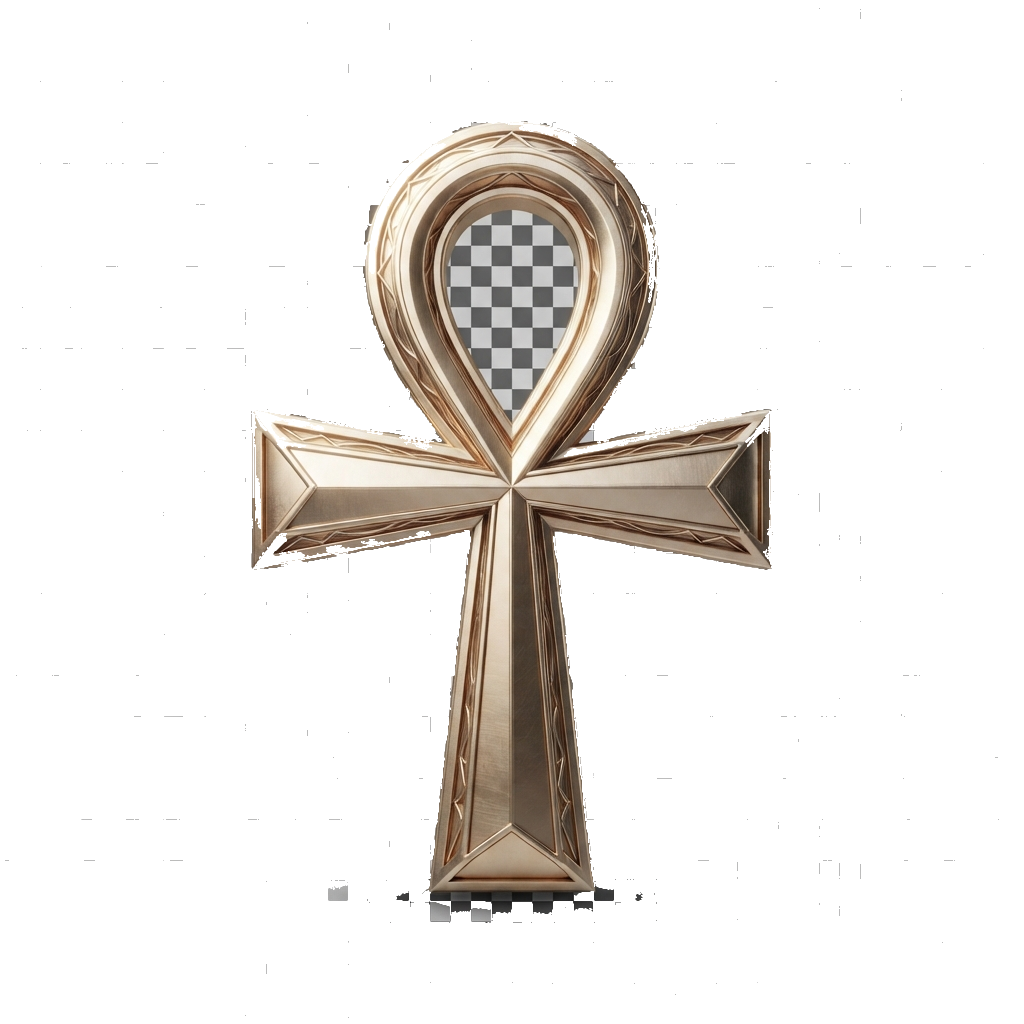
Pharaohs and gods are often depicted holding the key of life, a sign of their divine power and their ability to grant eternal life. In the beliefs of the time, the Ankh was also a symbol of protection and cosmic balance. Its unique shape, consisting of a loop at the top and a cross below, has sparked numerous interpretations.
Some researchers believe it represents the union of masculine and feminine, while others see it as the key opening the gates to the afterlife. In any case, the Ankh held a central place in Egyptian spirituality and accompanied religious rituals intended to ensure the prosperity and immortality of the sovereigns.
The Ankh in Hieroglyphs
In Egyptian writing, the Ankh was used as a hieroglyph meaning “life.” This symbol appeared in numerous religious inscriptions carved on temples, statues, and sacred objects. Priests and scribes used this sign to invoke divine protection and recall the presence of vital energy in the universe.
The key of life was often placed near royal names to ensure the pharaoh‘s prosperity. Its presence in sacred texts underscores the spiritual importance of this symbol in Egyptian culture.
Gods Associated with the Ankh Cross
In religious iconography, several deities hold the Ankh Cross in their hands. Gods like Osiris, Isis, and Ra are frequently depicted offering this symbol to the pharaoh. This gesture symbolizes the transmission of the vital breath and the divine blessing granted to the sovereign.
The key of life also appears in scenes of the judgment of the soul in the afterlife. These depictions show that the Ankh was not just a decorative symbol, but a central element of the religious beliefs of ancient Egypt.

Spiritual Significance of the Ankh Cross
The Ankh Cross is much more than a simple decorative symbol. In Egyptian spirituality, it represents the vital force that animates the universe and connects humans to the gods. Priests considered the Ankh a sacred key allowing access to spiritual dimensions and ensuring the continuity of the soul after death.
The upper loop often symbolizes eternity, while the lower part represents earthly life. Together, these two elements form a balance between the material world and the spiritual world. In temples, the key of life was used during rituals to invoke divine protection and promote the fertility of the Nile lands. It also appears in funerary texts as a symbol of rebirth.
The Egyptians believed that the soul had to pass through several stages before reaching immortality, and the Ankh represented this promise of eternal life. This symbol was therefore deeply linked to the notion of cosmic balance, called Maat, which represented the order and harmony of the world.
The Ankh as a Symbol of Eternal Life
The Ankh is often described as the key to eternal life in the beliefs of ancient Egypt. Funerary frescoes frequently show the gods holding this symbol near the pharaoh’s face to offer him the breath of life.
This symbolic gesture represents the transmission of vital energy and the promise of immortality. In royal tombs, the Ankh appears on walls and sarcophagi to protect the soul of the deceased during its journey to the afterlife. It was therefore considered a powerful talisman capable of guaranteeing rebirth.
Cosmic Balance Represented by the Ankh
In Egyptian thought, the Ankh Cross also symbolizes the harmony between the opposing forces of the universe. It represents the balance between life and death, heaven and earth, masculine and feminine.
This vision reflects the philosophy of Maat, a fundamental principle of Egyptian civilization. Priests used the key of life during ceremonies to maintain this cosmic balance. Thus, the Ankh was perceived as a bridge between the world of humans and that of the gods.

The Ankh Cross in Modern Jewelry
Different Types of Ankh Jewelry
The Ankh is available today in many forms in the world of jewelry. Necklaces are the most popular models, as they showcase the full shape of the symbol. Rings inspired by ancient Egypt allow for wearing this sign in a more discreet way.
There are also bracelets and earrings representing the key of life. Each type of jewelry allows you to integrate this historical symbol into a personal style while retaining its spiritual message.
Materials Used for Ankh Jewelry
Jewelry representing the Ankh Cross is made from various materials. Gold is often associated with wealth and light, recalling the importance of the sun in Egyptian culture. Silver provides timeless elegance and highlights the details of the symbol.
Stainless steel is appreciated for its durability and modern look. Some jewelry also incorporates natural stones to strengthen the spiritual dimension of the Ankh.

Why the Ankh Cross Still Fascinates Today
The Ankh in Contemporary Culture
In current culture, the Ankh appears in many artistic and creative fields. It is found in fashion, jewelry, tattoos, and even in some films inspired by ancient Egypt. Artists use this symbol to evoke the spirituality and history of ancient civilizations.
This presence in popular culture helps maintain interest in the key of life. It has become a universal symbol that transcends cultural boundaries.
A Symbol Between Fashion and Spirituality
The Ankh Cross possesses a dual dimension that explains its lasting success. It can be worn as an aesthetic accessory or as a spiritually charged symbol. Some people choose it for its elegant design, while others see it as a protective talisman.
This versatility allows the Ankh to adapt to different styles and beliefs. It remains a powerful symbol today, connecting modern fashion to ancient traditions.

How to Choose an Ankh Cross Piece of Jewelry
Quality Criteria for Ankh Jewelry
When purchasing an Ankh piece of jewelry, several criteria help evaluate the quality of the piece. The metal finish is essential to ensure the durability of the jewelry. The details of the symbol must be precise in order to respect the traditional shape of the key of life.
It is also important to check the strength of the chain or the setting. A well-designed piece of jewelry can retain its shine for many years.
Adapting the Ankh to Your Personal Style
The Ankh Cross can be integrated into different clothing styles. It can be worn with a minimalist outfit to add a discreet symbolic touch. In a bolder style, an imposing pendant can become the centerpiece of a look.
Some designers offer modern designs that are inspired by Egyptian aesthetics while remaining contemporary. This symbol thus allows you to express your personality while wearing a historical legacy.

FAQ on Ankh Cross: The Key of Life and its Influence on Jewelry
The Ankh Cross is an ancient symbol that still raises many questions today. Used in ancient Egypt to represent eternal life and vital energy, the key of life appears in many frescoes, temples, and hieroglyphs. Over time, this symbol has gone beyond the historical and religious framework to also become a popular motif in modern jewelry.
Many people are interested in the Ankh to understand its true meaning, its role in Egyptian mythology, or the reason why it is still worn today. Behind its recognizable shape lies a symbol steeped in history, spirituality, and mystery.
In this FAQ section on the Ankh Cross: the key of life and its influence on jewelry, you will find answers to the most frequent questions to better understand the origin, symbolism, and influence of this iconic symbol of ancient Egypt.

What does the Ankh Cross mean?
The Ankh Cross is an Egyptian symbol representing eternal life and vital energy. In ancient Egypt, the gods often held this symbol to offer life to the pharaoh. It appears in many temples and hieroglyphs. Today, it is considered a spiritual and cultural symbol.
Why did the Egyptians use the Ankh?
The Egyptians used the Ankh in religious rituals and artistic depictions. It symbolized fertility, protection, and immortality. Priests also used it as a sacred amulet. It served to invoke the blessing of the gods.
Can you wear an Ankh piece of jewelry today?
Yes, the Ankh Cross is very popular in modern jewelry. Many people wear it for its aesthetics or its spiritual significance. It can be integrated into different styles of jewelry. It remains a timeless symbol.
Is the Ankh a religious symbol?
The Ankh was originally a religious symbol linked to Egyptian mythology. It represented the relationship between humans and the gods. Today, it is often used as a cultural or spiritual symbol.
What is the difference between the Ankh Cross and a classic cross?
The Ankh Cross has a loop at the top, unlike the traditional cross. This shape symbolizes eternity and life. It represents the key opening the gates to the afterlife in Egyptian mythology.


