

With over 14 years dedicated to Egyptian-inspired jewelry, he has personally examined thousands of scarab, ankh, and Eye of Horus pieces.
The central place of the gods in Egyptian civilization
Main deities and their roles
Each god held a specific function within the Egyptian spiritual universe. This hierarchical organization reflected an orderly vision of the cosmos.
-
Ra: sun god, symbol of creation and rebirth
-
Osiris: master of the afterlife and judge of the dead
-
Isis: protective goddess and magician
This divine multiplicity helped explain every aspect of existence. Spirituality therefore permeated every dimension of daily life.

Founding myths and the creation of the world
Egyptian spirituality was based on particularly elaborate cosmogonic narratives. Myths explained the birth of the world from primordial chaos, known as Nun, a vast, formless watery expanse.
According to various local traditions, a creator god emerged from these waters to establish order, light, and time. This emergence symbolized the transition from disorder to a harmonious organization of the cosmos.
Several religious centers, such as Heliopolis or Memphis, offered their own versions of creation. These stories varied in detail but shared a fundamental idea: the universe originated from an intentional divine act.
Spirituality thus provided coherence to natural cycles, seasons, and celestial phenomena. Each sunrise became a symbolic repetition of the world’s first day.
These myths were not mere stories passed down orally. They structured religious thought, inspired rituals, and legitimized royal authority.
By placing humanity within a broader cosmic narrative, spirituality gave profound meaning to existence and each individual’s place in the universe.
The myth of Osiris and rebirth
The story of Osiris occupies a central place in Egyptian spirituality. After being killed by Seth, he is brought back to life by Isis. This resurrection founded the hope of life after death.
Egyptians symbolically identified with Osiris during their journey into the afterlife. This myth justified mummification and funeral ceremonies. It expressed the conviction that order always triumphs over chaos.

Spirituality and life after death
The belief in the afterlife was one of the major foundations of Egyptian civilization. Egyptians considered the human being to be composed of several spiritual dimensions, including the ka (life force) and the ba (mobile personality).
After death, these elements had to be able to reunite to ensure eternal existence. To make this possible, preserving the body through mummification was essential.
The passage to eternity was not automatic. The deceased had to appear before Osiris for judgment. Their heart was weighed against the feather of Maat, a symbol of truth and justice.
If the soul was judged worthy, it joined the Fields of Ialu, a place of bliss reminiscent of an ideal and abundant Egypt.
This spiritual conception directly influenced daily behavior. Respecting moral principles, acting with integrity, and honoring the gods guaranteed a favorable destiny. Spirituality therefore oriented earthly life toward an eternal horizon.
The Book of the Dead and funeral rituals
The Book of the Dead contained formulas intended to guide the soul in the afterlife. These texts were inscribed on papyrus placed inside tombs.
They served as spiritual protection against post-mortem trials. Rituals included prayers, offerings, and complex ceremonies. Spirituality thus ensured continuity between earthly life and eternity.

Sacred architecture as spiritual expression
Egyptian architecture is one of the most visible manifestations of ancient spirituality. Temples, sanctuaries, and pyramids were not mere monumental constructions, but true bridges between the human and divine worlds.
Each architectural element followed a precise symbolism. The orientation of buildings often followed the path of the sun, reinforcing their cosmic dimension.
Pyramids embodied the ascent to the sky and the idea of immortality. Their shape evoked a sunbeam frozen in stone, a symbol of eternal rebirth.
The temple, meanwhile, represented the universe in miniature: from the light-filled outer courtyard to the dark sanctuary reserved for priests.
This spatial progression translated into a spiritual journey toward the sacred.
These constructions also asserted the pharaoh’s religious power. They materialized his mission to maintain cosmic order and honor the gods.
Architecture thus became a lasting and visible expression of Egyptian spirituality.
Great religious complexes
Among the most impressive ensembles are the temples of Karnak and Luxor. These sites testify to the importance placed on religious ceremonies.
Sanctuaries housed divine statues and hosted ritual processions. Priests performed daily rites there intended to symbolically nourish the gods. Architecture thus became a concrete extension of spirituality.

The spiritual role of the pharaoh
The pharaoh was not just a political ruler governing a territory. He occupied a central position in Egyptian spirituality as a mediator between humans and gods.
He was perceived as the living incarnation of Horus and the son of the sun god Ra. This divine lineage gave his authority an undeniable sacred dimension, reinforcing his power in the eyes of the people.
His essential mission consisted of preserving Maat, the principle of order, justice, and cosmic balance. Governing therefore meant maintaining harmony between the earthly and divine worlds.
Administrative decisions, monumental constructions, and even military campaigns were interpreted as acts performed under the protection or will of the gods.
The pharaoh thus appeared as the guarantor of prosperity, stability, and the continuity of the kingdom.
Upon his death, he did not symbolically disappear. He joined the divine world and continued his role as protector from the afterlife.
Spirituality thus ensured dynastic continuity, placing royal power within an eternal perspective.
Coronation rituals
Spirituality in daily life
Contrary to popular belief, spirituality in Ancient Egypt was not limited to monumental temples or major official ceremonies led by priests.
It deeply permeated the daily life of all social categories, from the elites to rural populations.
Each individual navigated a universe where the sacred structured their understanding of the world, from happy events to hardships. The divine presence was perceived as constant, influencing health, fertility, harvests, and even family relationships.
Homes often possessed small domestic altars dedicated to a protective deity or a venerated ancestor. Prayers, libations, and food offerings were part of regular gestures intended to maintain spiritual harmony.
Religious festivals punctuated the year and strengthened social cohesion, blending belief, celebration, and collective identity.
This omnipresence of the sacred created a permanent link between the individual and the cosmos. Spirituality served as a moral, social, and emotional anchor, accompanying every stage of existence, from birth to death, in a continuity deeply rooted in Egyptian culture.
Sacred objects and symbols
Among the most widespread symbols were several objects charged with spiritual meaning:
-
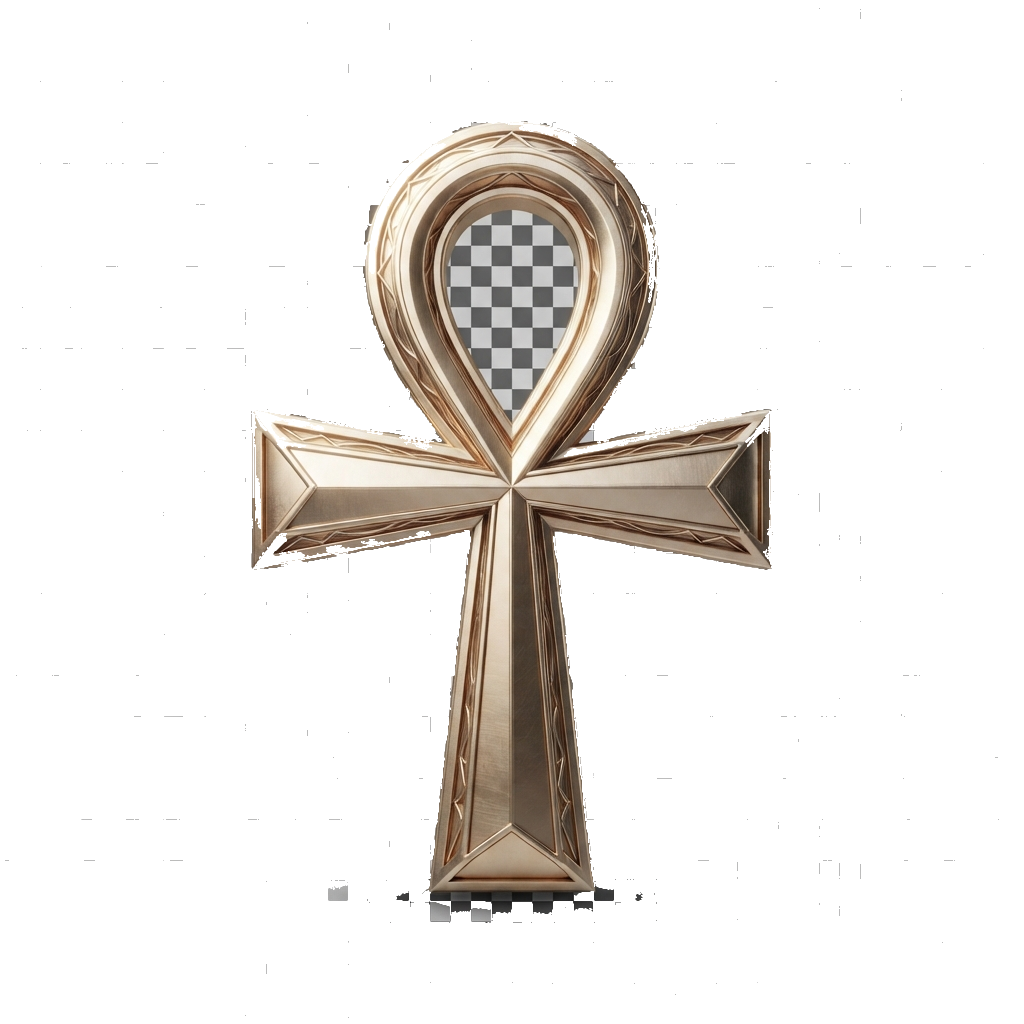
The ankh: symbol of eternal life
-
The scarab: representation of rebirth and transformation
-
The Eye of Horus: protection and healing
These symbols were worn as amulets or integrated into jewelry and everyday objects. They materialized the belief in permanent divine protection.
Through these visible signs, spirituality was expressed in a concrete, intimate, and personal way.

The spiritual legacy of the Egyptians
The influence of Egyptian spirituality did not end with the disappearance of the pharaohs. It deeply marked Mediterranean civilizations, notably Greece and Rome, which integrated certain symbols, deities, and religious concepts from Ancient Egypt.
The cult of Isis, for example, spread widely throughout the Greco-Roman world, becoming one of the most popular oriental cults of the Roman Empire. This transmission demonstrates the power and attractiveness of Egyptian spiritual thought.
Concepts related to life after death, the judgment of the soul, and resurrection also influenced other religious traditions. The idea of a post-mortem moral judgment, already central in the weighing of the heart, found echoes in various later religions.
Likewise, sacred monumental architecture inspired numerous symbolic models associating power with sanctity.
Even today, the spirituality of Ancient Egypt fascinates with its coherence and depth. It continues to fuel historical research, archaeology, and the collective imagination.
This legacy reminds us that Egyptian civilization did not rely solely on material achievements, but on a structuring and lasting spiritual vision.

FAQ on How did Ancient Egypt draw inspiration from spirituality?
Spirituality occupies a central place in the understanding of Ancient Egypt. It did not represent only a set of religious beliefs, but a true system structuring the organization of the world, institutions, and individual behaviors.
For the ancient Egyptians, the visible and the invisible were intimately linked, and every event found its explanation in a higher cosmic order. This global vision gave meaning to birth, death, royal power, and natural cycles.
Over the centuries, this civilization developed complex spiritual thought, articulated around gods, founding myths, and sacred rituals.
Temples, funerary texts, and everyday symbols still testify today to this profound religious dimension.
Understanding how Ancient Egypt drew inspiration from spirituality requires examining the beliefs, practices, and representations that shaped its identity.
The following section answers the most frequent questions from readers on this subject. It helps clarify essential points to better grasp the importance of spirituality in the construction and longevity of this millennial civilization.
Why was spirituality so important in Ancient Egypt?
Spirituality structured the entire society. It explained natural phenomena, legitimized power, and guided morality. Egyptians believed that cosmic balance depended on respecting the gods. Without spirituality, the order of the world would have been threatened.
What were the main Egyptian gods?
The main deities included Ra, Osiris, Isis, and Horus. Each possessed a specific function. Their worship varied by region. The pantheon reflected the spiritual richness of the civilization.
How did spirituality influence the pyramids?
Pyramids symbolized the ascent to the sky. They served as royal tombs and spiritual tools to ensure the pharaoh’s immortality. Their astronomical orientation reinforced their sacred dimension.
What is Maat?
Maat represented order, truth, and justice. It guaranteed the balance between humans and gods. The pharaoh’s mission was to preserve it. It was essential to the judgment of the dead.
Was the Book of the Dead used by everyone?
Mainly by the elites, as its production was expensive. However, simplified versions existed. Its goal was to protect the soul during the journey into the afterlife.
How did Egyptians pray daily?
Egyptians prayed at home or in temples through offerings, recited formulas, and symbolic gestures. They invoked the gods to ask for protection, health, or prosperity. Prayer was an integral part of daily life.
Why did Egyptians practice mummification?
Mummification allowed for the preservation of the body so that the soul could recognize it in the afterlife. Without an intact body, eternal life was compromised. This ritual thus guaranteed spiritual immortality.
What is the difference between the ka and the ba?
The ka represented the life force, while the ba symbolized the personality and mobility of the soul. After death, these two elements had to reunite. Their union ensured eternal survival.
What was the role of priests in Ancient Egypt?
Priests maintained temples and performed daily rituals. They symbolically nourished divine statues and interpreted sacred signs. They played a central role in religious life.
Did all Egyptians believe in the same gods?
Most Egyptians shared a common pantheon, but certain cities favored local deities. Beliefs could vary by region. Spirituality, however, remained a common foundation for the entire civilization.

Conclusion on How did Ancient Egypt draw inspiration from spirituality?
Spirituality constituted the fundamental foundation of Ancient Egypt and permeated all of its social, political, and cultural structures.
It was not limited to an isolated system of beliefs, but represented a global vision of the world, organizing the relationship between humans, nature, and the divine.
Through the pantheon of gods, founding myths, and funeral rituals, the Egyptians built a deeply coherent and symbolically structured civilization.
Temples, pyramids, and religious complexes still testify today to this quest for cosmic harmony. The pharaoh, as a sacred intermediary, guaranteed the universal balance embodied by Maat.
Even daily life, through amulets and domestic practices, reflected this constant connection with the sacred.
Understanding how Ancient Egypt drew inspiration from spirituality helps explain the remarkable stability of this millennial civilization.
This spiritual dimension gave profound meaning to existence, oriented behaviors, and ensured continuity between earthly life and eternity, in a unified and lasting vision of the world.


