

With over 14 years dedicated to Egyptian-inspired jewelry, he has personally examined thousands of scarab, ankh, and Eye of Horus pieces.
Origins and history of Egyptian jewelry
Jewelry held a fundamental place in Ancient Egyptian civilization, far beyond its simple decorative function. From the earliest dynasties, it testified to the artistic refinement and high level of technical mastery of Egyptian artisans. Necklaces, pectorals, rings, amulets, and bracelets were crafted with great precision, revealing a culture where aesthetics and symbolism were closely linked.
Archaeological discoveries, particularly in royal tombs like that of Tutankhamun, have shed light on the richness and complexity of these ornaments. The pieces found illustrate a sophisticated jewelry tradition, characterized by the use of advanced techniques such as inlay, cloisonné, and gold hammering.
Over the centuries, jewelry evolved while maintaining a strong visual identity, recognizable by its structured forms and symbolic motifs. Its constant presence in wall paintings, statues, and burials shows that it was an integral part of daily life as well as funerary rituals.
This millennial legacy continues to inspire contemporary jewelry today, drawing from this universe an aesthetic that is both timeless and steeped in history.
Social role and hierarchy
Jewelry reflected the rank and social status of individuals within Ancient Egyptian society. Pharaohs and nobles wore imposing pieces, richly decorated with gold and precious stones, as visible symbols of their authority.
Conversely, artisans and the working classes used more modest materials. This distinction affirmed prestige while respecting the social order and established traditions.
Spiritual and symbolic functions

Iconic materials of Ancient Egypt
In Ancient Egypt, the choice of materials was never left to chance. Every element used by artisans possessed aesthetic value as well as deep symbolic meaning.
Raw materials were selected for their luster, durability, and spiritual significance. This alliance between beauty and belief gave jewelry a sacred dimension, strengthening the bond between man, nature, and the divine.
Among the most iconic materials, we find:
-
Gold: considered the flesh of the gods and a symbol of immortality. It adorned the necklaces, pectorals, and bracelets of the elite, embodying power and eternity.
-
Lapis lazuli: a deep blue stone representing the sky, wisdom, and spiritual truth.
-
Turquoise: associated with protection, rebirth, and positive energy.
-
Carnelian: a red stone evoking vitality, strength, and courage.
These materials, worked with great technical mastery, gave Egyptian jewelry a visual richness and symbolic depth that continue to inspire contemporary jewelry.

Major symbols of Egyptian jewelry
In Ancient Egypt, symbols were essential in the creation of jewelry. Each motif conveyed a strong message related to protection, power, life, or rebirth.
Nothing was decorative by chance: these emblems reflected deep beliefs and a spiritual vision of the world. Even today, they captivate with their graphic strength and timeless meaning.
Among the most iconic symbols:
-
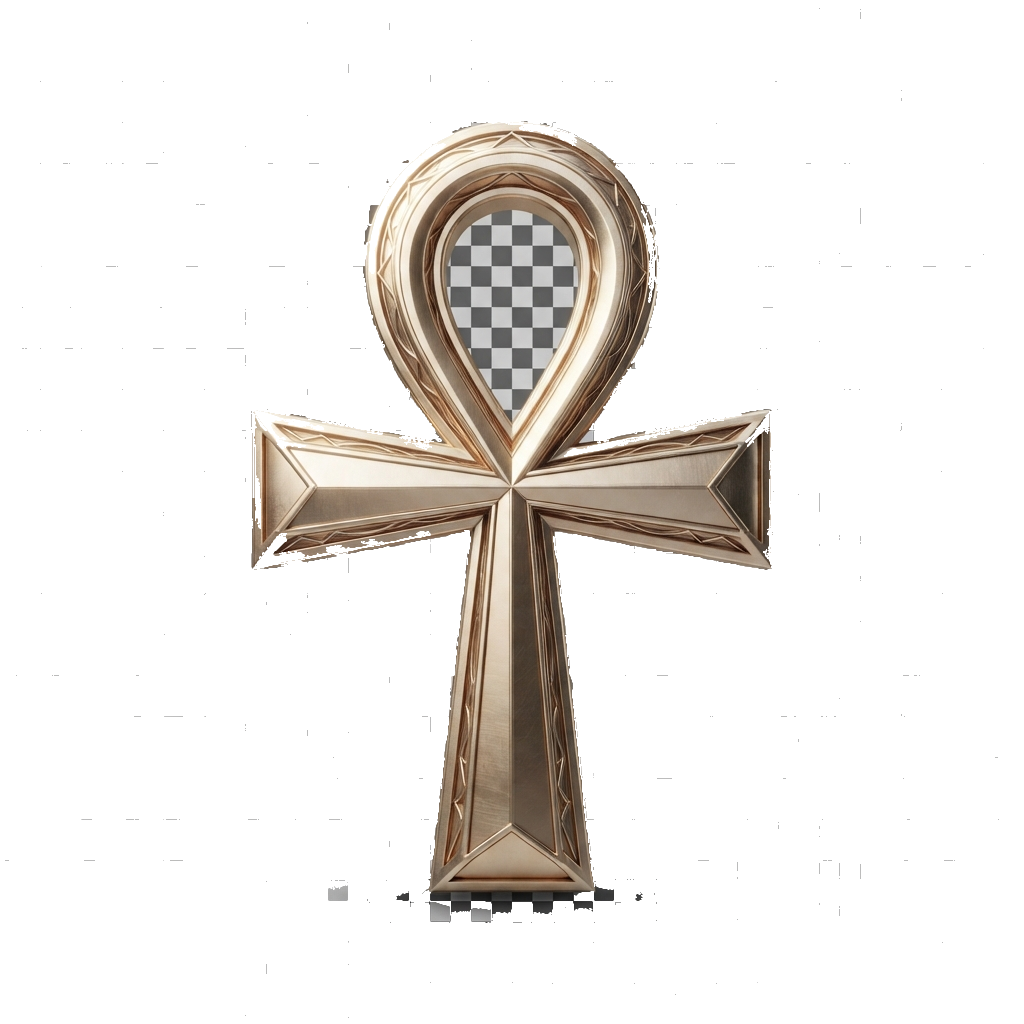
Ankh: symbol of eternal life and vital energy. Often depicted in sacred iconography, it embodies the breath of life. As a pendant, it combines spirituality and elegance thanks to its balanced design.
-
Eye of Horus: associated with the god Horus, it represents protection, healing, and vigilance. Worn as an amulet, it is appreciated today for its powerful graphic design in necklaces or bracelets.
-
Scarab: linked to the sun and the cycle of life, it symbolizes rebirth and renewal. Used in funerary amulets, it brings a strong mystical and symbolic dimension to modern jewelry.

Iconic forms of Egyptian jewelry
In Ancient Egypt, jewelry was distinguished by powerful and immediately recognizable forms. The lines were broad, structured, and carefully balanced to create a strong visual impact.
Each piece was designed to catch the eye and assert an elegant presence. This bold aesthetic, blending geometry and symmetry, continues to influence contemporary designers in search of character and authenticity.
Pectoral necklaces were among the most spectacular ornaments. Covering much of the upper chest, they were richly decorated and often reserved for the elite.
Their scale emphasized the prestige and power of the wearer. In current fashion, these necklaces exist in lighter and more refined versions, perfect for enhancing a simple outfit while maintaining a strong visual identity.
Wide bracelets, rigid cuffs, and ornate rings harmoniously completed the ensemble. Worn on the wrists or fingers, they symbolized strength, protection, and authority. Their structured design and bold proportions still bring character to a modern silhouette today, while preserving the majestic elegance inherited from antiquity.

Caps to wear with Egyptian jewelry
Pairing a cap with jewelry inspired by Ancient Egypt creates an interesting contrast between historical heritage and contemporary urban codes. This combination brings a modern touch to an outfit marked by ancient symbols.
To maintain an elegant look, it is essential to choose a cap that complements the jewelry without overpowering it. Balance relies on sobriety and visual coherence, so that the headwear subtly highlights the ornaments.
A minimalist model often remains the safest choice. A cap without a visible logo, with clean lines and neutral tones like black, beige, or ecru, helps structure the silhouette while letting the jewelry take center stage. This type of pairing works particularly well with simple, monochromatic outfits.
For a bolder style, a streetwear-inspired cap can also be considered. In this case, it is better to limit the number of jewelry pieces to avoid visual clutter. Finally, the choice of materials plays a key role: matte fabrics like cotton or linen harmonize better with gold jewelry or pieces adorned with natural stones, creating a coherent and balanced ensemble.

Choosing your Egyptian jewelry according to your body type
Selecting jewelry inspired by Ancient Egypt requires considering your silhouette to achieve a balanced and elegant result. These pieces are often distinguished by their bold volumes and assertive shapes.
To prevent a piece of jewelry from excessively dominating the outfit, it is important to adapt its proportions to your body type. The goal is to create a visual harmony that highlights the person before the accessory.
Imposing necklaces, such as wide or pectoral models, go particularly well with slender silhouettes or exposed necks. Conversely, finer pendants and delicate chains are better suited for smaller frames or shorter torsos. The length of the necklace also plays a key role: the lower it hangs, the more it structures the line of the bust and influences the perception of proportions.
As for wrists and hands, wide cuffs elegantly highlight slender wrists, while more discreet models are better suited for larger wrists.
Voluminous rings naturally draw the eye; it is therefore preferable to pair them sparingly with other accessories. Maintaining consistency in sizes and styles ensures a harmonious and refined ensemble.

Maintaining and caring for your Egyptian jewelry
Taking care of jewelry inspired by Ancient Egypt is essential to preserve its luster and symbolism over time. The materials used, whether gold-plated metals or natural stones, require special attention.
Proper maintenance helps preserve the original beauty of the pieces and prevents premature wear. This vigilance also contributes to maintaining the aesthetic and sentimental value of the jewelry.
Cleaning should be done with delicacy. It is best to use mild products and avoid harsh chemicals that could alter finishes or damage stones. In most cases, a simple dry or slightly damp cloth is enough to revive the shine and remove daily residue. A regular routine thus ensures better durability.
Storage also plays a decisive role. Storing each piece of jewelry separately limits the risk of scratches and friction. Using fabric pouches or compartmentalized boxes effectively protects the pieces. Careful storage ensures that your Egyptian jewelry retains its quality and elegance for years to come.

Egyptian jewelry as cultural and personal expression
Wearing jewelry inspired by Ancient Egypt goes far beyond the simple aesthetic dimension. Each piece embodies a history, a symbolism, and a worldview inherited from a millennial civilization.
Choosing this type of jewelry means asserting a particular sensitivity, an attraction to culture, spirituality, or the power of ancient symbols. These ornaments then become much more than accessories: they participate in the construction of a personal and stylistic identity.
Each piece of jewelry conveys specific values and beliefs. Depending on the symbol chosen, it can represent protection, rebirth, strength, or wisdom. It acts as a discreet talisman or as an assumed personal message. This symbolic dimension strengthens the bond between the object worn and the intimate history of the person who chooses it.
By wearing these creations, one also establishes a connection with the history and cultural heritage of Ancient Egypt. This reference to the past gives more depth to the style and transforms the act of adorning oneself into a conscious approach, rich in meaning and authenticity.

FAQ about Egyptian Jewelry: How to Style Them
Jewelry inspired by Ancient Egypt fascinates with its symbolic richness, powerful aesthetic, and millennial cultural heritage.
Increasingly present in contemporary fashion, they appeal as much for their spiritual dimension as for their visual strength. However, wearing Egyptian jewelry with elegance requires a certain understanding of their meaning and stylistic impact.
Between sacred symbols, noble materials, and structured forms, these pieces are never trivial. They tell a story and convey strong values, which can raise many questions: how to choose them well, how to pair them with modern clothing, or how to avoid a look that is too theatrical? Adapting these ancient ornaments to current codes involves finding a subtle balance between authenticity and modernity.
This FAQ aims to clarify the essential points to know before integrating Egyptian jewelry into your style. It will help you better understand their symbolic reach, their versatility, and the best practices for wearing them with harmony, whether in daily life or for special occasions.
What do Egyptian jewelry symbolize?
Egyptian jewelry symbolizes protection, life, rebirth, and power. Each motif has a precise spiritual meaning. They were worn as talismans as much as ornaments. Today, they retain this symbolic dimension.
Can you wear Egyptian jewelry daily?
Yes, provided you choose discreet models. A simple pendant or bracelet easily integrates into a daily outfit. The important thing is to avoid overloading. Egyptian jewelry can thus become everyday accessories.
How to pair Egyptian jewelry with modern clothing?
It is advisable to pair them with sober and plain clothing. The contrast highlights the jewelry. One strong piece is enough to create an elegant style. This approach ensures a balanced result.
Which materials should be preferred for Egyptian jewelry?
Gold, silver, and natural stones are the most common. They respect the spirit of Ancient Egypt. Quality materials ensure better durability. They also reinforce the aesthetic value of the jewelry.
Is Egyptian jewelry suitable for all styles?
Yes, because they exist in many forms. From minimalist models to imposing pieces, everyone can find their style. The essential thing is to choose a piece adapted to your personality. Egyptian jewelry is very versatile.
Can you mix Egyptian jewelry with other styles?
Yes, but in moderation. It is preferable not to multiply influences. An Egyptian piece of jewelry can very well go with a contemporary style. This combination creates an original look.
How to recognize quality Egyptian jewelry?
Quality is recognized by materials and finishes. The details must be neat and the symbols faithful. Quality Egyptian jewelry respects the ancient aesthetic. It must also be comfortable to wear.
What are the most popular symbols in Egyptian jewelry?
The most well-known motifs are the ankh, the eye of Horus, and the scarab, each with a strong spiritual meaning.
How to wear Egyptian jewelry without a “costume” effect?
Wear a central piece with sober and plain clothing for a modern and elegant style.
Are Egyptian motifs suitable for daily life?
Yes, with discreet models like fine pendants or simple bracelets adapted to daily life.
Conclusion on Egyptian Jewelry: How to Style Them
Styling jewelry inspired by Ancient Egypt relies above all on balance. These pieces, steeped in history and powerful symbols, deserve to be highlighted without overloading the silhouette.
The key consists of choosing one strong piece—whether it be a pectoral necklace, a cuff, or a symbolic pendant—and then pairing it with sober clothing with modern, clean lines. This contrast between ancient heritage and contemporary aesthetics creates an elegant, assertive, and perfectly current result.
Understanding the meaning of the motifs, adapting proportions to your body type, and selecting quality materials also help avoid the “costume” effect. Wearing Egyptian jewelry does not mean reproducing an ancient style, but rather subtly integrating its codes into today’s outfit. Focusing on the consistency of colors, textures, and volumes reinforces the harmony of the whole.
Ultimately, styling Egyptian jewelry consists of respecting their symbolism while incorporating them into a modern and personal approach. When chosen with intention and worn with moderation, these ornaments become true stylistic signatures that are elegant, cultural, and timeless.


